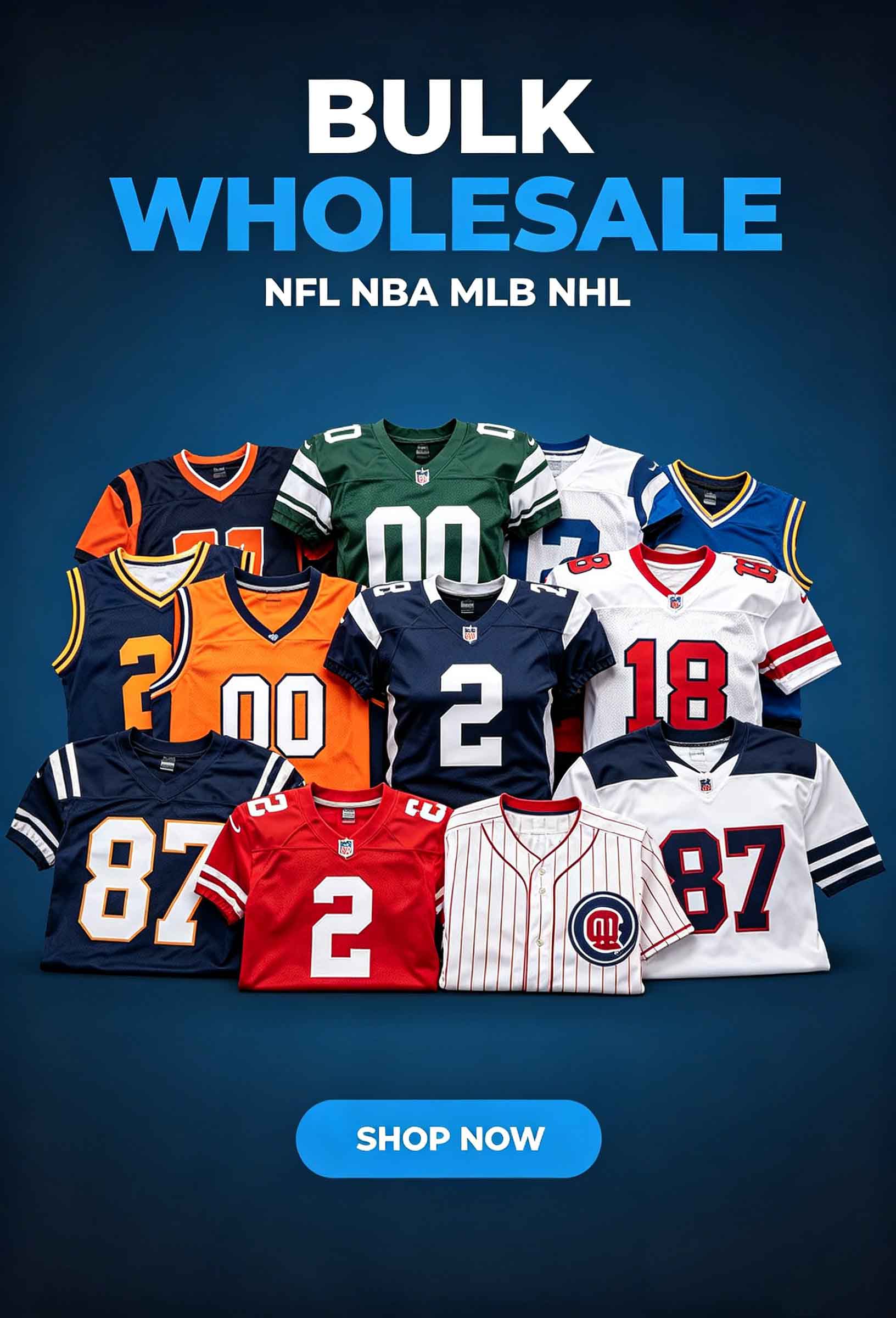
Ask any reseller how long do stitched NFL jerseys last, and the real answer depends on who built them. Glued-together replicas start peeling after a dozen washes, while genuine stitched construction survives years of Sunday wear and retail returns. That gap is where wholesale buyers bleed money — middlemen stacking markups, padded freight quotes, and production waits that leave shelves empty during the playoff run. Our house shop cuts that chain: bulk stitched NFL football jerseys held in the warehouse, factory pricing, same-week dispatch.
Stitched jerseys fall into two durability brackets. A properly built Tackle Twill jersey worn casually lasts 6 to 10 years before color fade becomes obvious. On heavy rotation — a league team wearing the same shirt twice a week in season — plan on 3 to 5 seasons before the mesh loosens at the shoulders. Anything falling apart under 3 seasons tells you the stitching was decorative, not structural.
Stitch density is the first thing to inspect. Wholesale-grade seams run 8 to 10 stitches per inch with a locked backstitch at every stop. Cheap production runs 5 to 6 and skips the lock, which is exactly why a left numeral lifts after a month of washing. Run a fingernail under the edge of a number on any sample before you commit to a reorder.
Fabric weight matters just as much. Warehouse stock uses 100% breathable polyester mesh at 300 GSM, a heavyweight knit that resists the pilling and see-through stretch that 180 GSM mesh shows after a few laundry cycles. Heavier mesh also holds embroidery tension better, so twill panels sit flat instead of puckering across the chest.
Numbers and letters are double-stitched Tackle Twill, cut from layered twill and sewn with a running stitch around the full perimeter plus a second pass on the inner edge. That second pass keeps 8-inch numerals from curling at the corners. Single-pass embroidery photographs identically and fails in the wash — a difference your customers find out about before you do.
Comfort details drive sell-through. Soft interior backing covers the underside of every stitched panel so the thread grid never scratches a player's back. It is the most common complaint on cheap imports and the fastest route to a return from a parent buyer.
Collar and shoulder construction decides how a jersey ages. Reinforced collar bands with double-needle topstitching resist stretching, and bar-tack reinforcement at the shoulder yoke and armhole keeps seams from splitting when players pull shirts on and off. Check the V-neck ribbing on a sample: single-stitched trim ripples within a season.
At volume, verify specifications against a written line sheet rather than a product photo. Suppliers who will not state mesh weight, stitch density, and twill layer count in writing rarely hold those numbers across reorders. Our factory-direct cheap stitched NFL jerseys wholesale program ships the identical spec on carton one and carton forty.
Premature failures usually come from care, not construction. Hot water, chlorine bleach, and high-heat tumble drying break down polyester mesh and shrink the blend used in collar ribbing and side panels. Pass these rules to your retail customers and your return rate drops measurably.
- Turn the jersey inside out before washing and close any buttons or snaps.
- Cold water, mild detergent, no bleach, no fabric softener.
- Skip the dryer — heat is what shrinks collar trim and lifts twill edges.
- Spot treat stains with diluted dish soap and a soft brush, never a hot soak.
- If ironing is unavoidable, press the reverse side on low heat with a cloth barrier.
Storage matters for retailers holding deadstock between seasons. Fold or hang in a cool, dry room out of direct sunlight, and avoid sealed plastic bags for long-term storage. Trapped moisture causes mildew in humid regions, and tight plastic leaves pressure marks on stitched twill. Cotton garment bags or breathable poly covers do the job.
Stains deserve a specific note because they eat resale margin on returns. Grass, mud, and light grease lift with a 1:10 dish soap and cold water mix worked in with a soft-bristle brush, followed by a normal cold wash. Never rub ink or paint with a hot rag — heat sets dye into mesh permanently.
Sizing questions generate a large share of retail service tickets. As a rule, stitched NFL jerseys run about one size larger than a standard t-shirt because the cut is built for pads and layering. Carry a full run from S to 3XL and publish a clear size chart; a size exchange costs you a shipping cycle and often the customer. Youth XL fits many adult women, so treat youth sizes as a real buying option rather than an afterthought, and split mixed roster orders into youth and adult cartons to keep fulfillment clean.
Run inbound QC before any carton goes live on your store. Pull 10 percent of units, or a minimum of five pieces, and check the points below. Ten minutes of inspection prevents a full return cycle.
- Stitch integrity: no thread tails over 3 mm, no skipped stitches on numeral corners.
- Number alignment: front and back numerals centered and level across matching pieces.
- Color consistency: no shade variance between panels in the same carton.
- Label accuracy: size tags and care labels match the actual garment.
- Weight check: weigh one size L — true 300 GSM mesh lands in the same range every unit.
Pricing structure is the other half of the margin math. Factory-direct wholesale runs on tiers, not one flat rate. Test orders land at one price, mid-volume cases step down, and full-carton or pallet buys reach the lowest landed cost. That lets a reseller start narrow, prove sell-through, then reorder at a stronger margin without switching suppliers mid-season.
Low minimum order thresholds matter more than headline pricing for new accounts. A distributor testing a new team color should not commit to 200 pieces up front. We open at an MOQ that fits a single storefront or a small league order, then scale to pallet volume for established distributors.
Inventory depth is what actually protects your sales. A four-week restock means missing the stretch run entirely. Warehouse-held stock in the fastest-moving team colors ships the same week, and reorders pull from the same bin as the original order so construction and color stay consistent across seasons.
Do stitched NFL jerseys shrink? Polyester mesh itself barely moves, but collar ribbing and side panels can pull in after a hot wash or dryer cycle. Cold wash and hang dry, and you will see no measurable change.
Are stitched jerseys worth it over printed ones for resale? Above a basic fan tee, yes. Stitched Tackle Twill survives years of wear, holds resale value, and produces far fewer returns than heat-pressed graphics that crack after a few washes.
How do I verify stitch quality on a bulk order? Pull five units, count stitches per inch along a numeral edge — target 8 to 10 — and tug each corner. A properly stitched panel does not lift; a glued or single-pass panel will.
How long do stitched NFL jerseys last in team rotation? Expect 3 to 5 seasons of twice-weekly use with cold washing and air drying. League accounts that rotate two jerseys per player regularly hit the top of that range.
Ready to stock jerseys that hold their stitch, their color, and their resale value? Visit Jerseys Wholesale House Shop at www.jerseyswholesalehouse.shop to browse the full warehouse catalog, check tiered bulk pricing, and confirm low MOQ terms before you commit. Warehouse-direct dispatch, factory pricing, and per-carton spec consistency — built for resellers who cannot afford a bad batch.