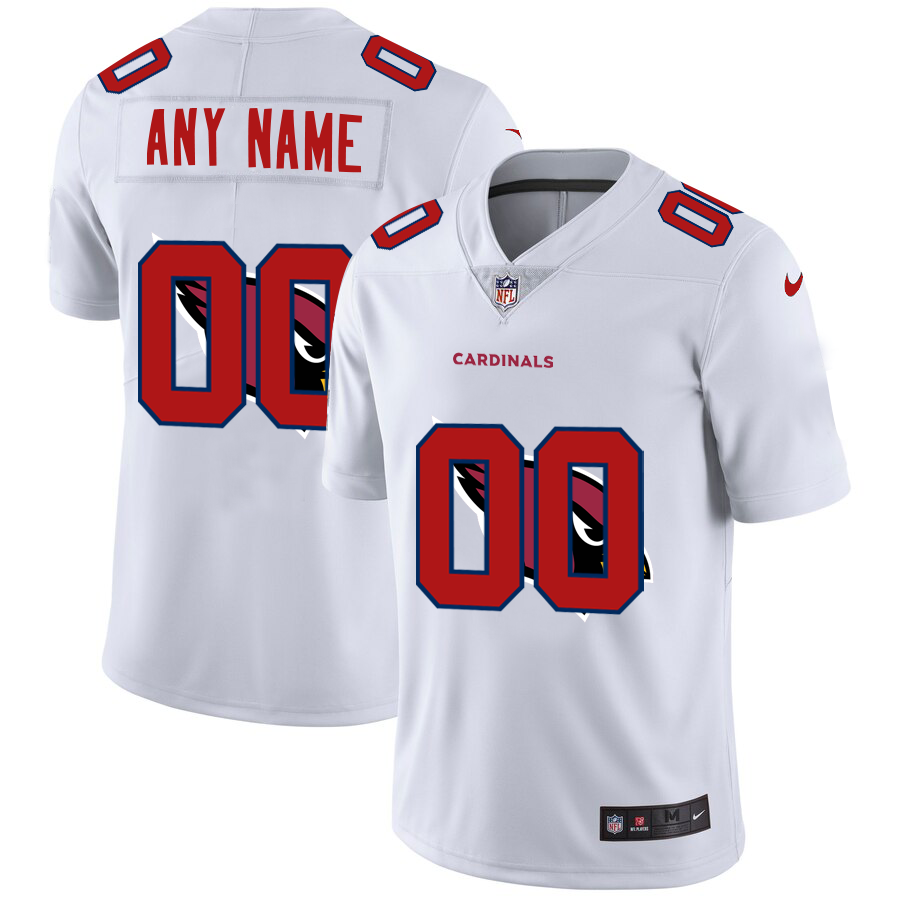
Ordering custom stitched football jerseys bulk comes down to cost basis before it comes down to design. Jerseys Wholesale House Shop keeps stitched NFL inventory on the floor — heavyweight mesh bodies, Tackle Twill numbers, reinforced collar bands — so league managers and resellers are not stuck waiting on a 45-day production window. The buyers who lose money are almost always paying two or three layers of markup, then absorbing the hit when a shipment lands short or the twill starts lifting after the first wash. Bulk buying is a supply problem first.
Fabric weight sets your retail story. Blanks in the 150–180 GSM range look flat on a hanger, show every fold, and pill within a few wears. The stock we pull for bulk orders runs 300 GSM 100% breathable polyester mesh, pro-cut at the armhole, which holds a shoulder line, hangs clean on a rack, and survives a full season of league play.
- Body: 300 GSM 100% breathable polyester mesh, pro-cut armhole
- Numbers: double-stitched Tackle Twill with satin-stitch outline
- Letters: sewn twill nameplate, thread matched to team color
- Collar: reinforced 1x1 rib knit band, double-needle set
- Interior: soft backing patch behind every stitched zone
Stitch density is the second thing to verify. Cheap suppliers run 5–6 stitches per inch to save thread time. Our stitched zones run 8–10 stitches per inch, with Z-pattern reinforcement at the shoulder yoke and armhole — the two spots where a jersey tears first when a linebacker grabs a fistful of fabric.
Tackle Twill is not a printing method, and you should be able to tell the difference in five seconds. A true twill number is a layered fabric appliqué — usually two layers, color over color — sewn down with a satin border. It has measurable thickness under your thumb and a clean edge that will not crack, peel, or fade after twenty washes. Heat-pressed vinyl has neither.
The inside of the jersey matters as much as the outside. Embroidery backing left raw will scratch skin and chafe through a full game. Every stitched piece we ship carries a soft interior backing trimmed flush to the design, so the number sits flat on the chest without a stiff plate behind it.
Collars are the most common failure point on bulk football stock. A cheap collar curls after two washes and the jersey looks used before it is sold. Ours use a reinforced rib knit band set with double-needle stitching and a taped neck seam, so the opening keeps its shape through machine washing and repeated stretching.
Customization is where most bulk orders get messy. Sewn twill nameplates beat heat-pressed lettering on resale value and durability, but they add setup time. If your buyers care about a jersey that looks right in year three, pay for the sewn plate. If you need a practice set fast, printed names are acceptable — just do not advertise them as stitched.
When you source custom stitched football jerseys bulk, request the spec sheet before the price sheet. GSМ weight, stitch count, collar construction, and backing type are the four numbers that separate a $12 blank from a $30 retail jersey. Suppliers who cannot quote them are brokers, not manufacturers.
Sizing kills more reorders than quality does. Measure chest circumference one inch below the armhole on a flat garment and compare against the size chart — do not trust the tag alone. Our cut runs true to standard US athletic sizing with roughly a one-inch tolerance across a production lot, and youth sizes scale from the same block, so a mixed-size bulk order stays visually consistent on the field.
Mixed-size bulk orders are normal and should be encouraged. A typical 144-piece team order breaks down to 12 small, 30 medium, 40 large, 35 XL, 20 2XL, and 7 youth sizes. Locking an entire order into one size means dead stock in your warehouse and a second order for the sizes you actually sold.
In-stock and custom are two different clocks. House Shop inventory dispatches in 24–72 hours because the goods are already stitched and racked. Custom stitched runs need art setup, digitizing, and per-color number cutting, which usually lands in 10–15 days for a mid-size order. If your league season starts in three weeks, buy stock, not a custom run.
Pricing works on tier breaks, not single-unit haggling. Standard breaks sit at 12, 48, 144, and 500 pieces, and the spread between the first and last tier is where a reseller's margin lives. Do the math on landed cost per unit — including freight and duty — before you quote your own customers.
Quality control is a process, not a promise. We run AQL 2.5 inspection on bulk pulls, which means a 144-piece order gets a sample pulled and checked against a fixed defect list. Ask any supplier what their AQL standard is. If the answer is vague, the inspection is not happening.
- Weigh the jersey — 300 GSM mesh should land in a predictable gram range
- Pull the inner seam and check for loose threads and skipped stitches
- Flex the twill number at the corner and look for lifting edges
- Roll the collar and confirm it springs back flat
- Steam one sample and re-measure against the size chart
Shrinkage is mostly a fabric and finishing question. Pre-shrunk polyester mesh at correct heat settings will move less than one percent after a cold wash and low tumble dry. Thread shrinkage is what pulls seams and puckers collars, so wash one sample from every bulk lot before you commit the whole order to a retail floor.
Care instructions protect your reorder rate. Tell your customers to wash cold, inside out, with no fabric softener, and to air dry or tumble low. Never iron directly over Tackle Twill — a pressing cloth and low heat only. Jerseys cared for this way hold their stitched numbers and collar shape for years, which cuts returns and keeps your brand in the buyer's good graces.
Plan your restock around the calendar, not around your shelf. Demand climbs hard from August through October, spikes again around the playoffs, and settles in late winter. Pre-book your tier at the volume break you expect to hit, and confirm the production lot so your reorder matches dye lot and thread color.
Freight matters more than most buyers expect. Master cartons usually hold 40–60 folded jerseys, so an order of 500 pieces is roughly 8–12 cartons. Consolidate into one shipment instead of splitting deliveries; split shipments double your handling cost and often arrive with mismatched lots.
What is the minimum order for custom stitched football jerseys bulk? MOQ sits low on stock programs and rises on fully custom runs. Confirm against your chosen tier before artwork is submitted.
How long do stitched jerseys actually last? With cold washing and no direct ironing, a 300 GSM Tackle Twill jersey holds its numbers, collar, and shape for several seasons of regular wear.
Do stitched NFL jerseys run big or small? Our cut follows standard US athletic sizing. Measure a flat chest below the armhole rather than relying on the tag, especially on 2XL and larger.
Can I mix sizes and teams in one order? Yes. Mixed-size, mixed-team stock orders are standard for resellers, and the tier price still applies to the combined piece count.
If you are rebuilding a reorder cycle or opening a new reseller account, look at the numbers before the photos: 300 GSM mesh, 8–10 stitches per inch, double-stitched Tackle Twill, soft interior backing, reinforced collar bands. Everything on the Jerseys Wholesale House Shop floor is stocked for fast dispatch, tiered wholesale pricing, and low MOQ so you can test a program without tying up capital. Browse the full catalog at www.jerseyswholesalehouse.shop, lock your tier, and get factory-direct stock moving to your warehouse this week.