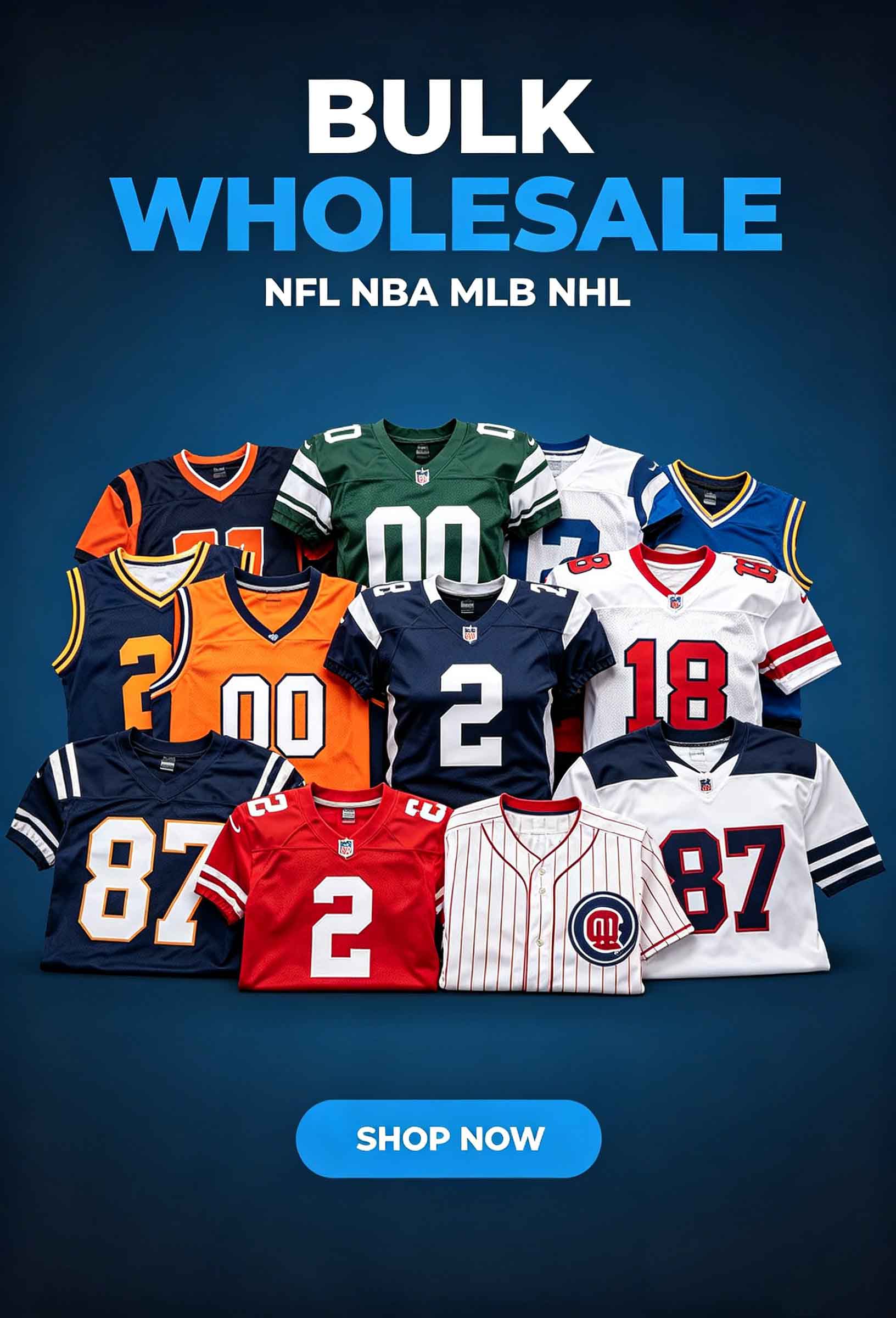
If you are weighing replica vs authentic NFL jerseys worth it for your store shelves, the answer usually comes down to margin per unit and how fast the stock turns. Most buyers we ship to stopped paying three layers of distributor markup years ago, because the stitched replica grade now survives a full retail season at a fraction of the landed cost. The real pain sits elsewhere: 30 to 45 day factory queues, numbers that lift after five washes, and size runs that arrive broken the week before the opener.
Here is how the grade structure actually works at the factory level, and what to inspect before you commit to a bulk order.
Retail "authentic" jerseys are built to on-field spec, and licensing fees are baked into every unit. That is why a licensed authentic retails near $300 while a stitched replica retails between $90 and $140. For a reseller, the authentic tier moves a handful of units to collectors. The stitched replica tier moves volume to fans, league parents, and team buyers who need 30 matching jerseys by Friday.
Be careful with the word "replica" itself. Suppliers use it to describe three very different products: heat-pressed numbers, single-layer screen print, and true double-stitched Tackle Twill. Only the third grade belongs on a wholesale shelf. Ask for a stitch close-up photo before you approve anything.
Fabric weight is the first filter. Our house stock runs 300 GSM 100% breathable polyester mesh on the body, with lighter 180 to 220 GSM mesh on the side and back panels for hot-weather markets. Higher gram weight holds shape through repeated wash cycles and does not go translucent under store lighting. Push any supplier for the actual GSM number instead of the word "mesh" — a 220 GSM body feels flimsy next to a 300 GSM one on the same rack.
Numbers decide whether the jersey comes back. Every stitched number we carry is built as double-stitched Tackle Twill: a twill base, a contrasting outline layer, and Z-stitch reinforcement at the shoulder corners and number edges where stress concentrates. Thread is 60/2 spun polyester run at 8 to 10 stitches per inch. Below 7 stitches per inch, edges lift and fray inside a season.
Flip the jersey inside out before you sign off on a sample. Proper soft interior backing covers every thread tail and stabilizer patch so the number does not scratch across the shoulder blades. That one detail separates a jersey a customer keeps from one they complain about in a review thread. It also cuts abrasion inside the wash drum, which extends the life of the embroidery.
Collars take the most abuse. Reinforced collar bands with double-needle topstitching keep the neckline from curling, and the rib knit should snap back flat after a pull-on test. Check the shoulder yoke seam too — single-needle construction puckers after one wash, and puckering is the first thing a customer notices on a hanger.
On the question buyers ask most — how long do stitched NFL jerseys last — a Tackle Twill jersey worn twice a week typically runs 4 to 6 seasons before the mesh pills. Heat-pressed replicas start cracking at the number edges around wash 10 to 15. Fewer returns and more repeat buyers follow from that gap alone.
Run this inspection on every bulk shipment before it reaches your shelf:
- Fabric weight: confirm 300 GSM body weight against the approved sample.
- Stitch density: count 8 to 10 stitches per inch on every number outline.
- Alignment: front and back numbers centered within 1/8 inch; nameplate level.
- Colorfastness: rub test dark navy and black twill against white; zero transfer allowed.
- Shrinkage: under 3% after three home wash cycles at 30°C.
- Size tolerance: chest measurement within ±0.5 inch of the spec sheet.
That level of documentation is why buying stocked inventory beats waiting on a factory queue. Stitched NFL jerseys held in our house warehouse ship in 24 to 48 hours, so a restock does not cost you two weekends of sales during the September rush.
Sizing is the second biggest source of dead stock. NFL cuts run roughly one size larger than a standard t-shirt, and shoulder width matters more than chest for customers who layer a hoodie underneath. Publish a chest measurement chart on every listing and your size-related returns drop immediately.
Build bulk orders around a tested size curve rather than an even split:
- S 10% / M 25% / L 30% / XL 22% / 2XL 10% / 3XL 3% for a general retail market.
- Shift 5% from small into 2XL for team and league orders with adult players.
- Keep youth sizes on a separate curve; never blend them into adult ratios.
Landed cost, not unit price, sets your shelf price. Add freight per unit, duty, and a 3% damage allowance to the invoice number before you calculate margin. A jersey that looks cheap per piece but arrives in 45 days at peak season is the most expensive stock in the building.
Pass a short care card to your retail customers and watch return claims fall. Cold wash inside out, no fabric softener, no chlorine bleach, hang dry away from direct sun. Heat is what kills mesh and lifts twill edges, so a dryer is the fastest way to destroy a stitched jersey.
Backroom storage matters as much as washing. Fold jerseys flat in poly bags, skip wire hangers that stretch the shoulders, and keep the stock room under 60% humidity. Stacked weight on stitched numbers for months will flatten the embroidery, so rotate older inventory to the front of the shelf.
Team and league buyers should send a roster spreadsheet with names, numbers, and sizes in one file. Spell every name the way the customer wrote it, confirm the number format, and lock the deadline against your season calendar. Custom name and number runs add 5 to 7 working days on stocked blanks.
Season timing drives everything. NFL volume peaks from late August through October, so plan restocks 6 to 8 weeks ahead and hold a safety buffer on the top five selling teams. Buying in tiered quantity brackets lowers your per-unit cost and protects margin when competitors discount late in the season.
Are stitched replica jerseys good enough to resell? Yes, at the Tackle Twill grade. Confirm double-stitched numbers, soft interior backing, and 300 GSM mesh, and the product holds up against retail expectations for a fraction of authentic cost.
What is the minimum order for a mixed size run? Low MOQ brackets apply per style, and you can mix sizes and teams inside one order. Larger brackets unlock better per-unit pricing, which is where distributor margin is actually made.
Do the numbers crack after washing? Stitched numbers do not crack the way heat-pressed ones do. They can fray if stitch density is low, so verify 8 to 10 stitches per inch on the outline before you buy.
Can I add custom names and numbers to bulk stock? Yes. Send a clean roster file, confirm the font and number style, and allow 5 to 7 extra working days on top of standard dispatch.
If you want to compare tiers side by side before committing, the full catalog at Jerseys Wholesale House Shop lists fabric weight, stitch spec, and size charts on every listing. Tiered wholesale pricing kicks in early, MOQ stays low enough for a test order, and stocked inventory ships factory direct within 48 hours so your shelves stay full through the season.